
Engineering recruiters in Idaho and the Mountain West: when to use one, what it costs, how to choose


Engineering recruiters find, screen and deliver the mechanical, civil, electrical and manufacturing engineers who are not applying to your job posts, then hand you a shortlist of qualified engineering candidates you can hire from. An engineering staffing agency works differently: it keeps the engineer on its own payroll and bills you by the hour.
At RNG Group we recruit full-time, permanent, direct-hire engineers and engineering leaders for employers across Idaho and the Mountain West. We have been placing engineers from Boise since 2015.
Should you use an engineering recruiter? If a critical role has been open longer than six weeks, the discipline is scarce in your city, or the empty seat is costing you work, a recruiter usually pays for itself. If a trusted referral can fill it this month, hire direct and keep the fee.
Why is it so hard to hire top engineering talent right now?
Demand is outrunning supply. The BLS projects architecture and engineering employment to grow much faster than the average for all occupations from 2025 to 2035, with about 174,800 job openings a year (BLS, 2025), and a third of engineering firms still turned down work in the past six months for lack of staff (ACEC, 2026).
The pressure has eased from its peak, but not gone. In late 2024, 51 percent of engineering firms were turning down work because of workforce shortages (ACEC, 2024); by the second quarter of 2026 that had fallen to 33 percent, while 64 percent of firms expect to increase hiring over the next 12 months (ACEC, 2026).
Manufacturing faces the same math. The Manufacturing Institute and Deloitte estimate the industry could need 3.8 million workers within the decade, with 1.9 million roles going unfilled through 2033 if nothing changes, and 65 percent of manufacturers call attracting and retaining talent their primary business challenge (NAM, 2024).
Idaho adds a local squeeze. The Idaho Department of Labor describes the state as being in a period of structurally low unemployment, with construction projected to grow faster than any other sector through 2027 (Idaho DOL, 2026). When unemployment is this low, the engineer you want already has a job, and a job post will not reach them.
In our Idaho searches this year, the roles that stay open longest share a pattern: the client needs a licensed or senior engineer with local jurisdiction experience, and the few people who fit are employed, well paid and not browsing job boards for new job opportunities. The search only moves when someone calls them directly.
The market also spans many engineering disciplines. Mechanical roles span product design and plant reliability, civil covers land development, transportation, water and construction support, electrical and controls tie hardware to software, and EIT hiring feeds the bench while PE searches carry licensure and public safety requirements.
What does an engineering recruiter do, and how is that different from a staffing agency?
An engineering recruiter finds and screens engineers you then hire onto your own payroll, for a one-time fee. Engineering staffing services keep the engineer on the agency’s payroll and bill you for their hours, so you never employ them.
RNG Group works the first way only. We place full-time, permanent, direct-hire professional and leadership roles across Idaho and the Mountain West, and we do not place tradespeople.
The fee runs one way: the employer pays a percentage of first-year salary on the candidate’s start date, and the job seeker pays nothing (Indeed, 2026). Engineers never pay for a job placement, so a call about new job opportunities carries no cost for them to take.
What does a good engineering recruiter do?
- Fluency across disciplines. The best engineering recruiters understand the nuances of engineering staffing. A credible one can explain how a mechanical designer approaches tolerance stack analysis, how a civil engineer prepares a drainage report for municipal review, and how a controls engineer sequences a start procedure. When a search partner speaks this way, intake time drops and shortlist quality rises because the search starts from shared understanding.
- Real networks. Good recruiters show up where engineering professionals gather, from professional society meetings to project tours, and keep ties with alumni groups. Presence builds trust, and trust makes outreach to top engineering talent faster when you open a new position.
- Respect for licensure and ethics. Engineering touches public safety, so they should understand FE and PE pathways, state board requirements and rules for responsible charge. They must verify credentials and ask candidates about times they balanced a schedule against safety or code compliance.
How much do engineering recruiters charge?
You pay a percentage of the engineer’s first-year salary, and only when they start. Indeed puts the average at 20 to 25 percent, with a range from 15 to 40 percent (Indeed, 2026), and Capterra puts the typical range at 15 to 30 percent (Capterra, 2024).
The arithmetic for a mid-market role is simple. The BLS median pay for a civil engineer was $100,840 in May 2025, so a 20 to 25 percent contingency fee on that salary is roughly $20,000 to $25,000 (BLS, 2025).

Boise sits a little under that. BLS published wages put Boise about 7.5 percent below the US mean ($31.02 against $33.54 an hour), so the same percentage costs slightly less here, though Ada County wages are rising about twice as fast as the US and unemployment is low, so the gap is closing (BLS OEWS, 2026) (BLS QCEW, 2026).
Specialized recruiting services use one of three common fee models. The one you choose changes when you pay and how much attention the search gets.
| Fee model | How you pay | When you pay | Typical cost | Exclusivity | Best for |
|---|---|---|---|---|---|
| Contingency | Percentage of first-year salary | Only when a candidate they found starts | 15 to 40 percent, most often 20 to 25 (Indeed, 2026); 15 to 30 percent (Capterra, 2024) | Usually none; several firms may work the same role | Individual professional roles where you want no upfront risk |
| Retained | Percentage of first-year salary, paid in parts | An upfront fee, paid whether or not a candidate is placed (Capterra, 2024), with the balance as the search progresses | Same percentage range as contingency | Exclusive; one firm runs the search | Director and manager searches, confidential replacements |
| Flat fee | Fixed sum agreed at intake | As agreed, often tied to the start date | Set per search; no neutral published benchmark | Varies by agreement | Repeat hiring of similar roles where both sides want a predictable price |
Fee models compared. Percentage ranges from Indeed and Capterra (Indeed, 2026) (Capterra, 2024); flat-fee terms vary by firm.
Whatever the model, get the replacement period, the payment date and any exclusivity term in writing before the search starts. We walk through our own terms on the first call rather than publishing them here.
Then weigh the fee against what the empty seat is costing you. Our guide to cost per hire in Boise shows how to put a number on that.
Are recruiting services worth paying for when you hire an engineer?
It is worth it when the search is already behind the national median, the discipline is scarce, or the empty seat costs more than the fee. SHRM’s 2026 benchmark puts median time-to-fill for nonexecutive roles at 39 calendar days, so an engineering search past six weeks is behind (SHRM, 2026).
Scarcity in specialized engineering is measurable. The BLS projects growth from 2025 to 2035 of 6 percent for civil engineers (BLS, 2025), 8 percent for electrical and electronics engineers (BLS, 2025), 11 percent for mechanical engineers (BLS, 2025) and 12 percent for industrial engineers (BLS, 2025), all at or above the average for every occupation.
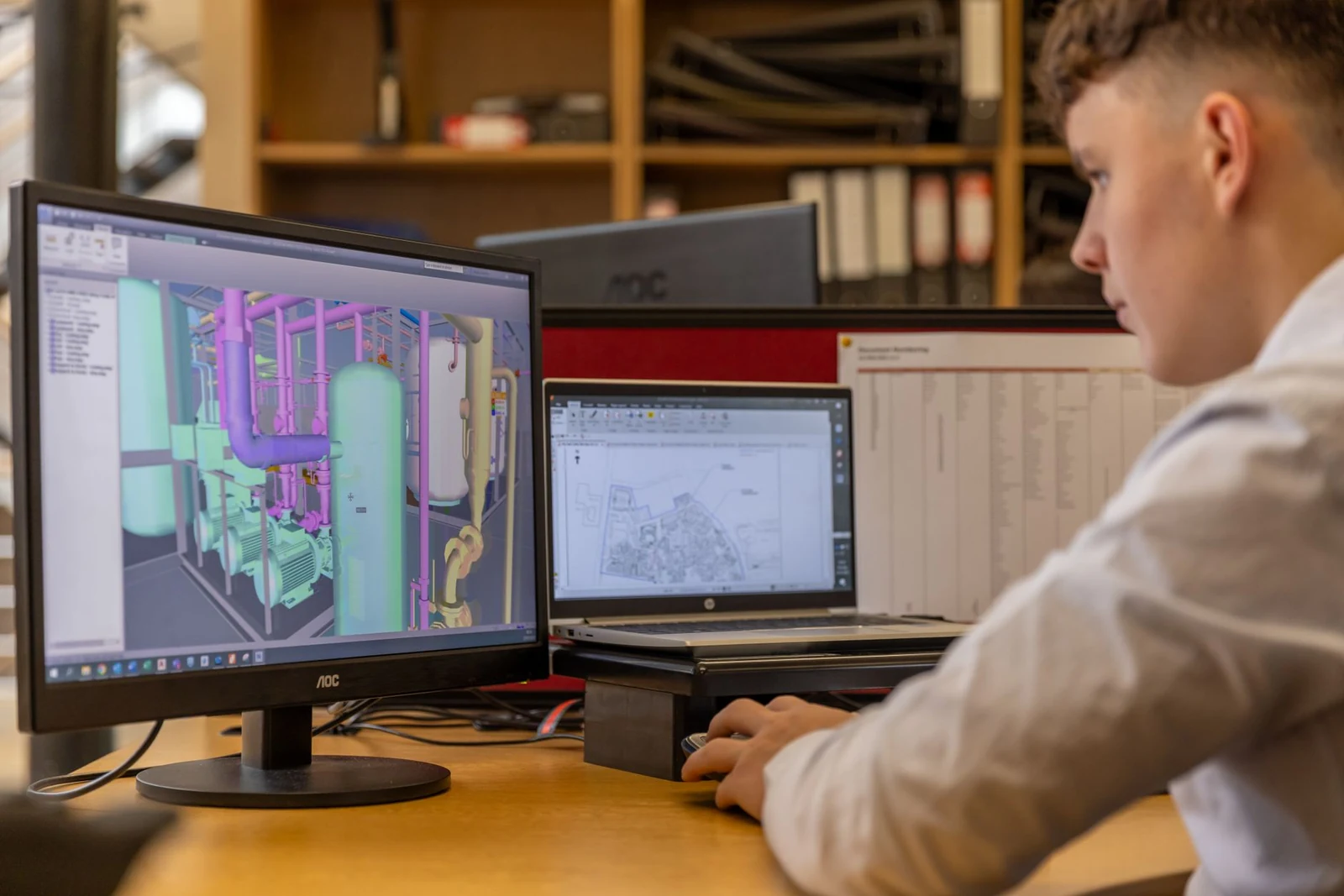
In-house hiring is thinner than it looks. SHRM found only 7 percent of nonexecutive positions were filled internally in 2025, so most engineering hires come from outside the company either way; the question is who does the finding (SHRM, 2025).
A recruiter is usually the wrong call for:
- A junior or EIT role in a city with a deep supply of new graduates.
- A role a trusted referral can fill this month.
- A role you have not defined well enough for anyone to search against.
A pattern we see in intake calls: a firm has run the search alone for a quarter, cycled through applicants who lacked the license or the local experience, and lost two top candidates to slow interviews. What outside help changes is not the job post; it is direct outreach to people who were never going to apply, and a decision rhythm that keeps them engaged.
What happens when you engage an engineering recruiter?
Engineering recruitment services start with an intake that turns your need into a scorecard, then move to direct outreach, screening, a shortlist and weekly reporting. Your side of the hiring process is a clear brief and fast feedback.
Start with outcomes instead of a shopping list
Before sourcing begins, expect help writing a short scorecard that captures the mission of the role and a handful of outcomes. A civil design engineer might own permit-ready plan sets, coordination with survey and utilities, and on-time submittals to the city.
A mechanical reliability engineer might own improved mean time between failures on a bottleneck asset and the corrective actions that follow root cause analysis. Outcomes anchor a personalized recruitment process to your engineering project needs.
Capture the true constraints and interfaces
Engineers live in constraints. The intake should document your staffing requirements, software environments, drawing standards, approval bodies, supplier dependencies, and the mix of field and office time.
If the role requires coordination with construction teams, say so. If the engineer will stamp drawings in the next year, state the expectation clearly, because clear constraints filter the pipeline early and protect everyone’s time.
Align interviewers to competencies
Before interviewing and hiring begin, define who will assess which competencies. A lead may cover system thinking and stakeholder communication, a senior engineer may test method depth and code familiarity, and a project manager may probe schedule and risk habits.
When roles are clear, the hiring process moves faster and produces notes you can compare.
How do recruiters find engineering professionals who are not on job boards?
By calling them. The engineers who can do the job are already employed, which is why a third of engineering firms turn down work for want of staff even while job openings sit unfilled (ACEC, 2026).
Strong search firms use discipline-specific channels. For mechanical roles they lead with recent product wins and access to test facilities; for civil roles they reference current projects by jurisdiction and the path toward project manager and responsible charge.
For EIT candidates they explain how mentorship, exam support and career opportunities work, and for PE candidates they speak to career goals and the mix of design and review the person wants in a next career step. Outreach must also respect commute, relocation and regional pay norms, or the shortlist will not hold.
Expect a weekly update that shows pipeline stages, interview feedback themes and any risk to the start window. If candidates stall over an unclear remote policy or salary expectations the range cannot meet, the report should say so and propose a fix.
Before you call a recruiter
- Write a two-page intake pack: mission, outcomes, key constraints, software, field time and who the engineer will work with.
- Block interviews in a single window, hold the panel within one week of the shortlist, and ask for same-day notes.
- Share a real day in the life, including the mix of deep work, meetings and field or lab time, and the hard days as well as the wins.
- Decide who signs off on the offer before the first interview, so approval does not add a week.
- Keep a warm bench: ask the search firm to keep near-fit candidates engaged for the next new engineering requisition.
Our guide to working with a recruiter covers each of these in more depth.
How do engineering recruiters screen candidates?
A good screen tests method, verifies credentials and checks references against the scorecard, in that order. Keyword matching against a resume does not make a qualified candidate.
Structured technical interviews
In technical recruiting, unstructured chats hide the important signals. A disciplined interview probes method, assumptions and tradeoffs, with prompts on material selection, manufacturability and tolerances for a mechanical role, or hydrology basics, grading logic and permitting steps for a civil one.
For PE candidates, include a question about responsible charge and how they handle design disagreements with peers or reviewers. Scoring guides keep evaluations fair and fast, so you can hire with confidence.
Credential and reference verification
Degrees, EIT status and any PE license should be confirmed with the issuing institution or state board, never taken from the resume. We advise clients not to advance a candidate to final interview until that check is done.
References should confirm outcomes tied to the scorecard, such as lower change orders from better coordination, permits approved first time, or reduced downtime after a reliability program. Ask about collaboration, responsiveness and ethics.
Work samples and soft skills
Short exercises reveal how candidates think through complex engineering problems: a bracket with a load case for a mechanical engineer, a drainage adjustment on a site plan for a civil engineer, a start sequence and fault response for a controls engineer. Keep the task to twenty minutes, judge the approach rather than the deliverable, and score against a rubric.
Then ask for stories. How a candidate shared bad news early, resolved a conflict with a supplier, or taught a junior teammate a new method tells you how they will behave when the schedule tightens.
How long does it take to fill engineering jobs through a recruiter?
Plan against the national median and expect scarce disciplines and leadership roles to run longer. SHRM’s 2026 median time-to-fill for nonexecutive positions is 39 calendar days (SHRM, 2026), and in 2025 it was roughly a month and a half for both executive and nonexecutive roles (SHRM, 2025).
Three things stretch an engineering search past that median: a licensure requirement that shrinks the pool, relocation into the Mountain West, and slow interview feedback. Only the first is about the candidate market.

In our experience the client calendar, not the candidate supply, is what most often stretches a search. A shortlist that waits ten days for interview slots loses its best name to another offer.
Live pay data and acceptance drivers
Compensation moves with the market and with location, so ask for current ranges for your city and discipline. As a national anchor, BLS median pay in May 2025 was $100,840 for civil engineers (BLS, 2025), $104,110 for mechanical engineers (BLS, 2025), $125,040 for electrical and electronics engineers (BLS, 2025) and $102,440 for industrial engineers (BLS, 2025), against $50,980 for all occupations (BLS, 2025).
Boise runs below those national figures, not above them. BLS published wages put Boise about 7.5 percent below the US mean ($31.02 against $33.54 an hour), while Ada County wages are rising about twice as fast as the US and unemployment is low, so an offer priced on last year’s range will be short (BLS OEWS, 2026) (BLS QCEW, 2026).
Our 2026 Mountain West hiring and compensation report gives regional context for those ranges. Acceptance drivers beyond pay include hybrid flexibility, access to mentors, field exposure, exam fee support, and career opportunities with a clear path to lead roles.
Closing with clarity and respect
Closing is about alignment. A good close recaps the mission of the role, the outcomes, the growth path and the schedule, and makes travel, field time and near-term stamping expectations explicit.
Clarity reduces declines, because an engineer weighing a new career opportunity wants no surprises. Then build a first-month onboarding plan with system access, introductions, one meaningful early task and a mentor, because a good start is what turns an accepted offer into a hire who stays.
Which engineering positions do recruiters fill in Idaho and the Mountain West?
Civil, mechanical, electrical and controls, industrial and manufacturing engineers, and the managers and directors who lead them. Demand is strongest where Idaho’s growth is: construction, manufacturing and the infrastructure that serves a fast-growing population.
The national picture for engineering jobs by discipline, from the BLS: civil engineering holds 380,600 jobs with about 22,700 openings a year (BLS, 2025), mechanical 298,500 jobs and 17,800 openings (BLS, 2025), electrical and electronics 297,900 jobs and 16,300 openings (BLS, 2025), and industrial 365,100 jobs and 23,100 openings (BLS, 2025). Many of those openings come from engineers retiring.
Idaho is growing into that demand. The state is projected to add 120,000 jobs by 2032, growing 1.3 percent a year against 0.3 percent for the US (Idaho DOL, 2024), with construction the fastest-growing sector and architecture and engineering ranked sixth of 22 occupational groups for projected growth (Idaho LMI, 2025). Construction alone is expected to create more than 16,000 new jobs, and every one of those projects creates staffing needs for engineers (Idaho DOL, 2024).
Product and manufacturing engineering
These roles blend design, testing and collaboration with production, and strong candidates think about cost, quality and delivery at once. The search should test for design for assembly, root cause analysis and change control, and for plant-facing roles, maintenance coordination and reliability thinking.
Supply is tight here. Machine Design’s 2024 salary survey found 69 percent of respondents’ firms had difficulty filling open positions, with mechanical design the hardest specialty to fill, though that is a trade-press survey of 311 self-selected respondents, so treat it as color rather than a headline number (Machine Design, 2024).
Civil and infrastructure
Civil teams live inside codes, public review and tight coordination with survey and construction. Screening confirms experience with local jurisdictions, utility coordination and plan set preparation, and for field roles, observation skills and report clarity.
The replacement wave is real. ASCE, citing Brookings, reports that about 1.7 million infrastructure workers will leave their jobs each year from 2021 to 2031, and roughly 17 million will need to be replaced (ASCE, 2025).
Controls and electrical
Controls engineers connect sensors, logic and hardware to move product safely and reliably, so screen for sequencing, alarm strategy and commissioning habits. Electrical roles require code knowledge and coordination with utilities and equipment vendors, and a focused work sample separates paper fit from real fit.
Engineering managers and directors
We also place the people leading engineering teams: engineering managers, directors and project engineering leads. These searches are usually retained, run confidentially, and judged on leadership evidence as much as technical depth.
Expect the intake to cover executive search requirements such as span of control, budget ownership and the hardest decision the last person in the seat had to make.
How do you choose the right engineering recruiting firm?
Whether or not you have worked with recruiters before, ask about discipline focus, hiring model, screening, replacement terms, exclusivity and local references before you sign anything. The right firm answers all six in plain words, and the wrong one changes the subject.
- Discipline focus. Can they explain the difference between a reliability engineer in a batch plant and one on a continuous line? If not, they are a generalist staffing firm with an engineering page.
- Hiring model. Confirm they place direct hires onto your payroll, and that their fee is tied to a start date.
- How they screen. Ask for their interview guide and how they verify licensure. A vague answer means resume forwarding.
- Replacement terms. Get the replacement period and whether it is full or prorated in writing.
- Exclusivity. Ask how many firms they expect to be working the same role and what changes if you give them the search alone.
- Idaho references. Ask for two clients in the state you can call.
- Public reviews. Read the Google reviews. RNG Group holds a 5.0 rating from 46 reviews, and you should expect to see named clients in whatever firm you consider.
One pitfall sits on your side of the table. Top talent explores several options at once, so when interviews drag or notes arrive late, momentum fades; set a tight decision rhythm and let your search partner run the calendar.

Frequently asked questions
How much does an engineering recruiter cost?
The employer pays a percentage of the engineer’s first-year salary, due on the start date, and the candidate pays nothing. Indeed puts the average at 20 to 25 percent and Capterra the typical range at 15 to 30 percent (Indeed, 2026) (Capterra, 2024).
How long does it take to fill an engineering role through a recruiter?
The national median time-to-fill for nonexecutive roles is 39 calendar days, and a well-briefed engineering search with fast client feedback can beat it (SHRM, 2026). Licensed, senior and leadership roles usually take longer, and slow interview scheduling is the most common reason a search runs past the median.
Do you place contract or temporary engineers?
No. RNG Group does not place contract or temporary engineers; we place full-time, permanent, direct-hire professional and leadership roles only, and if short-term cover is what you need we will say so on the first call.
What happens if an engineer leaves soon after job placement?
Most direct-hire agreements include a replacement period, and you should have it in writing before the search starts. We explain our own terms on the first call, and a good intake and a clear day-in-the-life description are the best protection against an early exit.
Talk to an engineering recruiter in Boise
RNG Group was founded in Boise in 2015 by Jessica Cafferty, is women-owned, and has made more than 300 direct-hire placements across Idaho and the Mountain West, with a 5.0 Google rating from 46 reviews. Contact an engineering recruiter today and learn whether a search is the right move: if you have an engineering seat that has been open too long, book a call and we will tell you honestly.
Filed under: Recruiting