
Idaho economy in 2026: what it means for employers hiring in Boise

Most pages about the Idaho economy tell you the state is growing. This one tells you what that growth does to your next hire.
Job openings across the US fell about 10 percent between February 2020 and January 2026, while Idaho’s rose 21 percent, the largest increase of any state (RNG Group, 2026). Over roughly the same stretch Idaho’s population grew 10.4 percent, the fastest in the country (Census, 2026).
Together they describe a market with more demand for people than almost anywhere, a labor pool that is growing but already busy, and newcomers who arrive with coastal pay expectations. Here is the data and what it means for your hiring.
What does Idaho’s economy and GDP look like in 2026?
Idaho’s real gross domestic product (GDP) reached about $101.6 billion in 2025, up about 2 percent (FRED, 2026), and nonfarm payrolls stood at 890,700 in August 2026 (BLS, 2026). Trade, health care, government and professional services employ the most people, with agriculture still a pillar.
Real gross state product, measured in chained 2017 dollars, was $101.6 billion in 2025 against $99.6 billion in 2024, a state GDP gain of about 2 percent (FRED, 2026). Nonfarm employment reached 890,700 in August 2026 on preliminary figures, up 7,800 or 0.9 percent over the year (Idaho Labor, 2026).

The employer base is spread across economic sectors rather than dependent on one industry, which is one reason the job market held up while national openings shrank.
| Sector (BLS supersector) | Jobs, August 2026, preliminary |
|---|---|
| Trade, transportation and utilities | 167,700 |
| Education and health services | 146,400 |
| Government | 128,700 |
| Professional and business services | 111,100 |
| Leisure and hospitality | 94,600 |
| Manufacturing | 77,700 |
| Construction | 77,100 |
| Financial activities | 42,800 |
| Other services | 31,400 |
| Information | 8,700 |
| Mining and logging | 4,500 |
Source: Bureau of Labor Statistics, Economy at a Glance for Idaho, August 2026 preliminary (BLS, 2026).
Agriculture in Idaho does not appear in the payroll table, but on 2024 data it still drives 17.2 percent of the state’s total economic output, $44.5 billion in annual sales (up from $37.5 billion in 2022) and about 137,900 jobs (University of Idaho, 2026). Food processing sits on top of that base, which is why J.R. Simplot and Lactalis appear on the Boise Valley Economic Partnership‘s list of the metro’s largest employers alongside Micron and St. Luke’s.
The same economic impact study puts the state known for its potatoes first in the national ranking for potatoes, barley, alfalfa and trout, second for hops, and third for sugar beets and for livestock and dairy measures such as milk cows, milk and cheese (University of Idaho, 2026). Agricultural products worth about $2.8 billion a year go to export, and a growing processing sector keeps more of that commodity value in the state instead of shipping out raw milk and potatoes (University of Idaho, 2026).
What is Idaho’s unemployment rate and why does it matter to employers?
The state’s seasonally adjusted unemployment rate was 3.6 percent in August 2026 (BLS, 2026), against 4.1 percent nationally (BLS CPS, 2026). At that level the people you want are already employed, so a job post alone will not reach them.
The state rate has moved between 3.6 and 3.7 percent every month from March through August 2026 (BLS, 2026). The US rate was 4.1 percent in August (BLS CPS, 2026).
In its 2026 Idaho economic outlook, the Idaho Department of Labor describes the state as being in a period of structurally low unemployment, with labor force growth that consistently outpaces the nation because of net in-migration (Idaho Labor, 2026). The labor force reached 998,378 in August 2026 (Idaho Labor, 2026).
For an employer, a 3.6 percent rate means your best candidate is not browsing job boards. In our searches the strongest finance, sales and operations people are working, reasonably content, and will move only for a specific, well-made case, which is why we put so much weight on how to recruit passive candidates rather than waiting for applications.
Southwestern Idaho employers posted 32,573 unique job openings in July 2026, so you are competing for those employed candidates in plain sight (Idaho LMI, 2026).
Are people still moving to Boise?
Yes. Idaho added 190,610 residents over the past five years, from April 2020 to July 2025, a 10.4 percent gain that ranked first in the nation, and grew another 1.4 percent in the latest year, second nationally (Census, 2026).
Idaho’s population went from 1,839,123 in April 2020 to 2,029,733 in July 2025, growth of 10.4 percent against 3.1 percent for the US as a whole (Census, 2026). Migration supplied 76 percent of the 2025 increase, about 22,063 people, and 90 percent of those movers came to the Gem State from other US states (Idaho Labor, 2026).
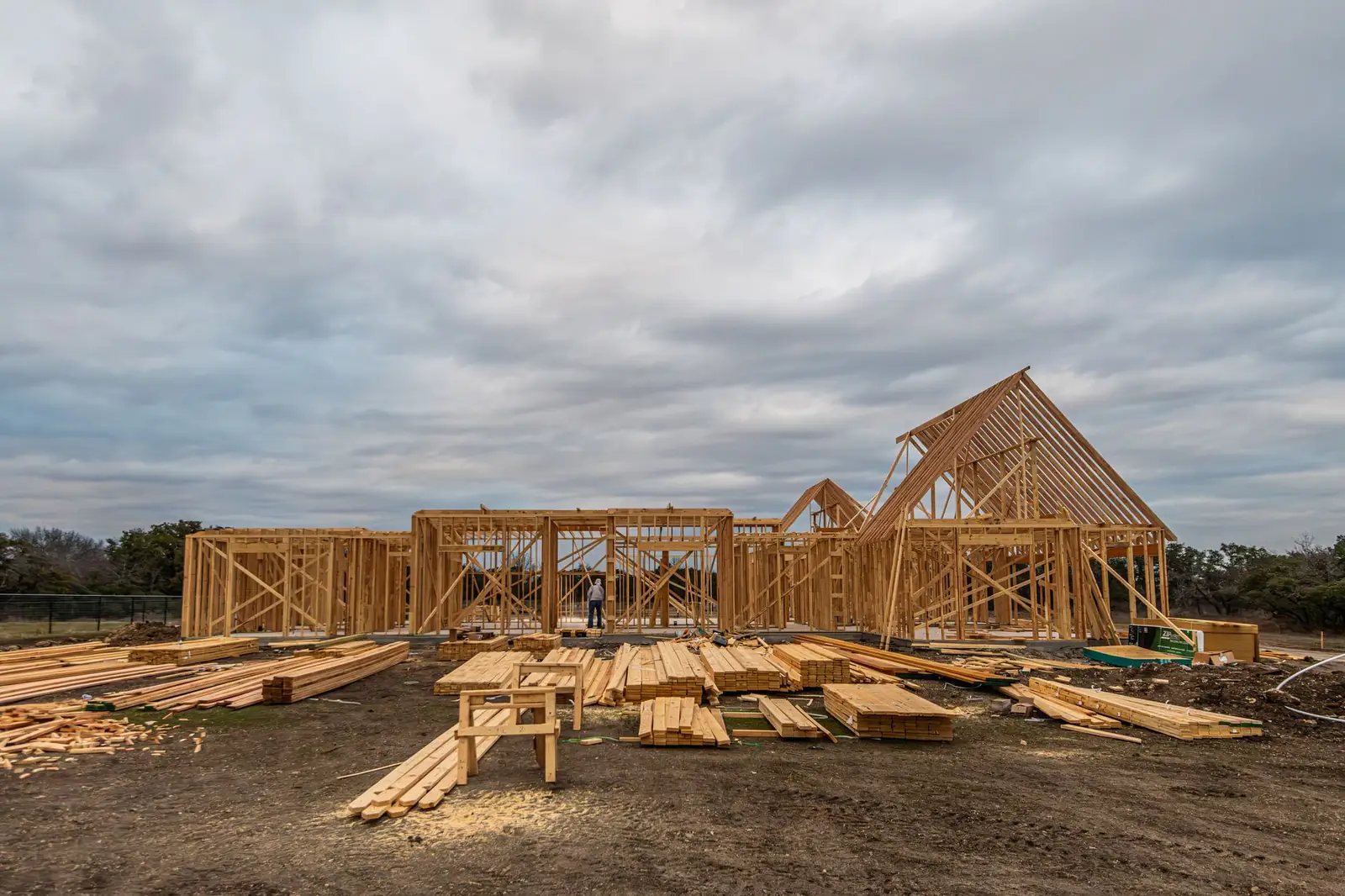
The growth is in the metro, not in Boise city itself. Boise City moved from 235,722 to 238,429 between the 2020 base and July 2025, while Meridian went from 117,810 to 142,988, Nampa from 100,414 to 120,384 and Kuna from 24,096 to 31,525 (Census, 2026). Kuna’s 8.4 percent gain in the latest year was the 11th fastest of any US city over 20,000 people, and Idaho posted the highest annual housing-unit growth in the country every year from 2020 to 2025 (Census, 2026).
The Boise metro counted 844,979 residents in 2025, having added 81,134 people between 2020 and 2024, of which 72,266 was net migration (BVEP, 2025).Many of those arrivals came from coastal markets and brought startup experience, professional networks and, in many cases, compensation expectations shaped by Seattle or San Francisco (RNG Group, 2026).
Two consequences: your candidate map should cover Meridian, Nampa in Canyon County, and Kuna as a matter of course, and the newcomer who looks perfect on paper may be benchmarking your offer against a coastal one.
Which tech companies and large employers are hiring in Boise?
Boise’s largest employers span technology, health care, food and finance, with Micron and St. Luke’s at the top of the list (BVEP, 2025).Micron’s fab expansion alone is projected to add about 17,000 regional jobs (Idaho LMI, 2026).
The Boise Valley Economic Partnership’s top-employer list runs from St. Luke’s Health System and Micron Technology through Albertsons, J.R. Simplot, HP Inc., Idaho Power, WinCo, Wells Fargo, Blue Cross of Idaho, Citi, Plexus, Scentsy, Lactalis and Amazon (BVEP, 2025).Micron’s semiconductor fabrication expansion in Boise is projected to create approximately 17,000 regional jobs, including roughly 3,500 direct technical positions (Idaho LMI, 2026).

Information is a small payroll category at 8,700 jobs, so much of the region’s technical hiring happens inside manufacturers, health systems, retailers and financial firms rather than in companies labeled “tech” (BLS, 2026). Software developers were still among the roles with rising posting activity in July 2026 (Idaho LMI, 2026).
If you are a 40-person company hiring a senior engineer, you are competing with Micron for the same person. That does not mean you lose.
It means your offer, your interview process and your story about scope and ownership have to be sharp, which is the work our information technology recruiters do every week.
Starting a business in Idaho? What does hiring look like here?
This is not a registration guide. It is a picture of the workforce landscape a new Idaho employer will draw from: growing, well fed by local graduates, and paid closer to national levels than the state’s reputation suggests.
The Boise metro labor force stood at 457,514 in 2025, and 68 percent of Boise State undergraduates are employed in Idaho within six months of graduating (BVEP, 2025).The state’s own projections put the largest job gains between 2025 and 2027 in health care and social assistance, at 7,250 jobs, followed by construction at 3,980 (Idaho Labor, 2026).
On pay, Boise workers earned a mean $31.02 an hour in May 2025 against $33.54 nationally, about 7.5 percent below the US figure (BLS OEWS, 2026). The gap is closing quickly: Ada County’s average weekly wage rose 7.9 percent over the year to the first quarter of 2026, roughly twice the 3.9 percent national increase (BLS QCEW, 2026).
Budget from current data, not last year’s survey, and use Idaho salary benchmarking that reflects what offers are closing now.
Founding teams usually fill the first few seats through their own networks, and that works until it does not (RNG Group, 2026). A plan for small business hiring in Boise matters most at the point where those networks run out.
Why is the West Coast slowdown Idaho’s hiring window?
Job openings fell 36 percent in Washington, 28 percent in Oregon and 27 percent in California between February 2020 and January 2026, while Idaho’s rose 21 percent (RNG Group, 2026). Experienced people in those markets are more available, and more open to relocating, than three years ago.
Those state figures come from the map in RNG’s 2026 report, which reads the coastal declines as a sharp contraction in tech hiring and concludes that engineers, GTM leaders and operators are available in ways they were not three years ago (RNG Group, 2026). The report also notes one area of modest softening in Idaho: mid-level technical roles have seen slight candidate flexibility as West Coast talent has increased supply, though it does not expect that window to last (RNG Group, 2026).
The window is real, but it is a relocation conversation, not a discount. In our searches the candidates weighing a Boise role against a remote coastal offer are doing the math on total value: base, equity, housing, schools and commute.
Companies that can speak confidently to all of those win more often than companies that lead with cost of living alone.
What does Idaho’s economy mean for your next hire?
Idaho has more openings, lower unemployment and faster population growth than almost any state, and a wage gap with the coasts that is closing fast. That rewards employers who prepare before they post and move decisively once they find the right person.
Five moves follow from the data.

- Benchmark pay on current numbers. With Ada County wages rising about twice as fast as the nation, a range set from last year’s survey will look like a lowball (BLS QCEW, 2026).
- Recruit people who are not looking. At 3.6 percent unemployment the best candidates are employed, so sourcing has to be deliberate (BLS, 2026).
- Sell total value. Newcomers and relocating candidates compare your offer with coastal packages, so be ready on equity, scope and quality of life, not just base.
- Move quickly once you decide. A tight market punishes slow feedback loops; good candidates take the offer that arrives first with clear terms.
- Bring in help before your network runs dry. Founder networks fill the first seats and then stop.
RNG Group is a Boise direct-hire recruiting firm founded in 2015 with more than 300 placements across professional and leadership roles, with fees paid by the employer and never by the candidate. If you would rather talk it through, our Boise recruiters will tell you what the market looks like for your role this month.
Frequently asked questions
Why is Idaho’s economy growing?
Population growth is the main engine: Idaho grew 10.4 percent between 2020 and 2025, fastest of the 50 states, and 76 percent of the 2025 increase was migration (Idaho Labor, 2026). That inflow feeds the state’s economy through a broad base of employers across trade, health care, government, manufacturing, construction and agriculture (BLS, 2026).
What is Idaho’s unemployment rate?
Idaho’s seasonally adjusted unemployment rate was 3.6 percent in August 2026, the same as July (Idaho Labor, 2026). The national rate for the same month was 4.1 percent (BLS CPS, 2026).
Are people still moving to Boise?
Yes, though the fastest growth is in the surrounding cities: Kuna grew 8.4 percent in the latest year alone, the 11th fastest of any US city over 20,000 people (Census, 2026). The metro as a whole reached 844,979 residents in 2025 (BVEP, 2025).
Is Idaho a good place to hire tech talent?
Yes, with a caveat: the region has Micron, HP, Plexus and a fab expansion projected to add about 17,000 regional jobs, so demand for engineers is strong and you are competing with well-known names (Idaho LMI, 2026). The West Coast slowdown has made experienced engineers more available and more willing to relocate (RNG Group, 2026).
Ready to hire in Idaho’s labor market?
Start with the free hiring health scorecard to see where your process is losing candidates in this market. It takes a few minutes and shows you what to fix before your next search.
Filed under: Local area