Construction staffing agencies vs direct-hire recruitment: hiring Idaho leaders who run the work

Contractors across Idaho, from builders to plant operators, are chasing the same small pool of experienced leaders. Search for construction staffing and most of what you find is temporary labor from construction staffing agencies: agencies that send hourly workers to a jobsite for as long as the project needs them.
RNG Group does something different. We run full-time, direct-hire construction recruitment for the leaders and construction professionals who plan, price, run and answer for the work, in construction and manufacturing alike.
This guide covers what the term means, what the Idaho labor market looks like in 2026, which leadership roles are hardest to fill, how to hire leaders who stay, and how we recruit them.
What does construction staffing mean, and where does direct hire fit?
Construction staffing usually means a temp staffing firm supplying hourly workers for a project, on the agency’s payroll. Construction recruiting, or direct hire, finds permanent employees who join your payroll from day one, and at RNG those are the people in construction management who lead the work.
Neither model is wrong. They solve different staffing needs.
A temp staffing process answers “I need twelve people on site Monday.” A direct-hire search answers “I need the superintendent who will still be running our jobs in five years.”
If the hire decides whether a project or plant hits its numbers, it belongs in your core full-time workforce, not a temp order. Our guide to direct hire explains the model in full, and our checklist for choosing a construction staffing agency helps you compare firms on either side of the line.
| Temporary staffing | Direct-hire leadership recruiting | |
|---|---|---|
| Who employs the person | The agency, which bills you | You, from day one |
| Typical length | Days to months, tied to a project | Permanent, full-time |
| Typical roles | Hourly crews and tradespeople | Project and construction managers, superintendents, estimators, operations and plant leaders |
| How the fee works | A markup on hours worked, billed while the person is on site | One employer-paid fee, a percentage of first-year salary or a flat fee |
| Best for | Surges in labor on a single job | Roles that set cost, schedule, safety standards and culture |
What does construction hiring in Idaho look like in 2026?
Both sectors are growing, construction industry and manufacturing alike. Idaho had 77,300 construction jobs in September 2026, up 2.7 percent over the year (BLS, 2026).
Manufacturing reached 77,500 jobs, up 3.5 percent on a preliminary estimate (BLS, 2026). Across all sectors, Idaho job openings rose 21 percent since 2020 while the US average fell 10 percent (RNG Group, 2026).
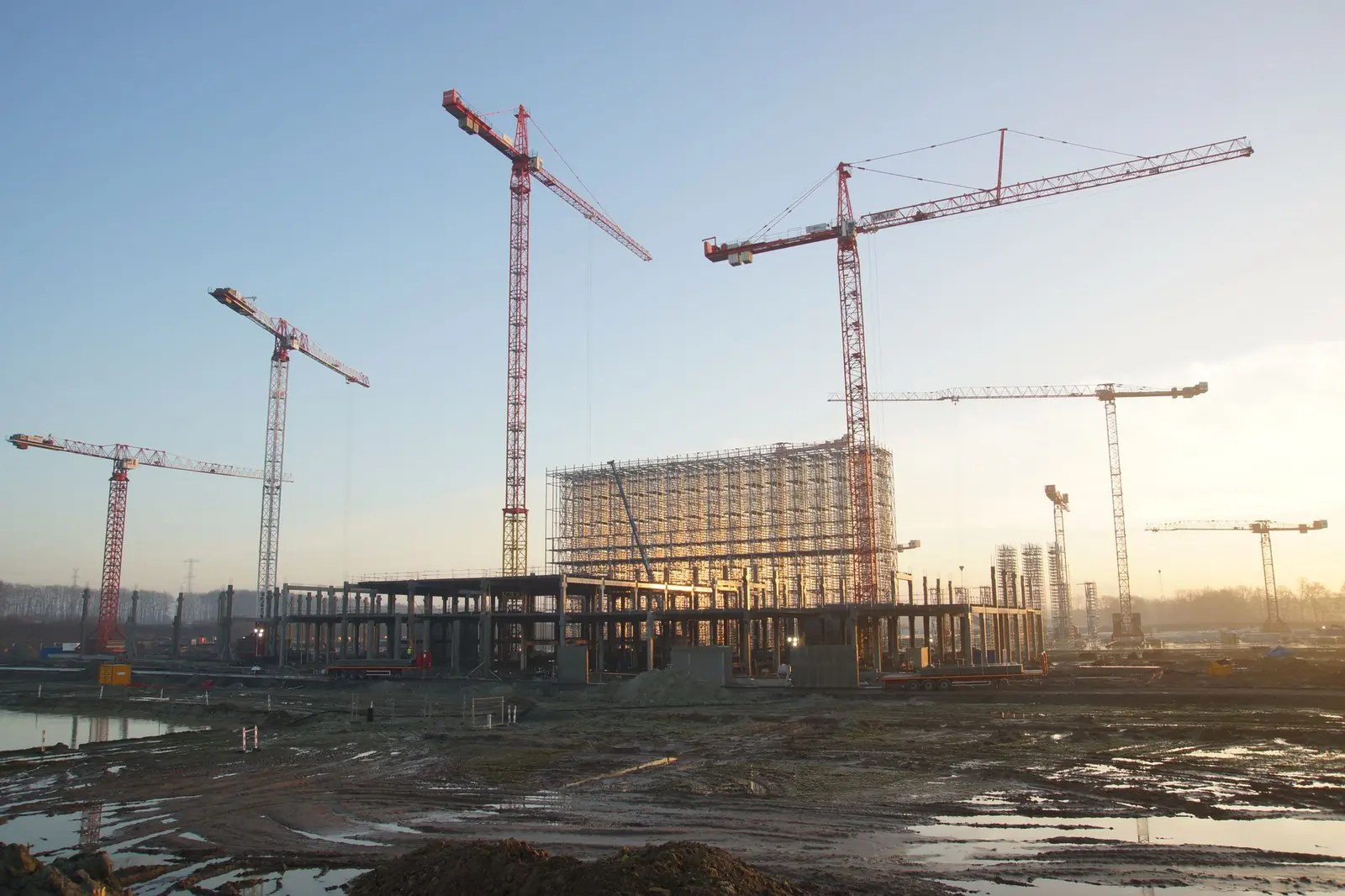
The people keep arriving. The Boise region added 81,134 residents from 2020 to 2024, and 72,266 of them came through net migration (BVEP, 2024).
More residents means more residential projects, schools, roads and plants, and every one of those projects needs someone to run it on budget and on time.
Pay is the other half of the picture. Boise wages sit about 7.5 percent below the US mean, $31.02 against $33.54 an hour (BLS OEWS, 2026), while Ada County wages grew 7.9 percent over the year against 3.9 percent nationally (BLS QCEW, 2026).
That gap is closing fast, so an offer built on last year’s numbers can lose a candidate this year.
The craft labor shortage is real, and the Associated General Contractors of America found 42 percent of firms had projects delayed by worker shortages (AGC, 2026). We do not fill those crew roles, but the shortage raises the stakes on the leaders who have to plan around a thin skilled workforce.
Which construction and manufacturing leadership roles are hardest to fill?
The hardest roles combine technical judgement with people leadership, and there is little construction talent like that in any one market. The same AGC survey found 82 percent of firms had salaried openings (AGC, 2026).
Of the firms with salaried openings, 87 percent said those roles were as hard or harder to fill than a year before (AGC, 2026). These are the roles we recruit:
- VPs and Directors of Construction or Operations: own the portfolio, the margins and the bench of people leading construction teams.
- Construction managers: run projects from preconstruction to closeout.
- Project managers: hold budget, schedule, owner relationships and subcontractors together.
- Superintendents: run the job site day to day and keep crews safe and productive.
- Estimators and preconstruction leads: decide whether you win work at a price you can build for.
- Safety managers: set the safety protocols and the site safety standard your crews work to.
- Plant, production and operations managers: keep a manufacturing floor on output, quality and cost, often on complex industrial projects.
The national numbers explain the competition. The Bureau of Labor Statistics projects construction manager jobs to grow 9 percent from 2025 to 2035, with about 49,700 openings a year (BLS, 2026).
Median pay for construction managers was $114,990 in May 2025 (BLS, 2026), and industrial production managers earned a median $126,060 (BLS, 2026).
Every Idaho contractor that wins a big commercial and industrial job goes looking for the same superintendent at the same time.
How do you hire construction professionals who stay?
Leaders stay when the job matches what they were told and the pay holds up against the next call from a competitor. Most early exits trace back to the recruitment process, not the person.
Check tenure patterns first, even for top talent. A superintendent who changed construction firms every year may have a reason, but you want to hear it in the screening process, not after the offer.

Talk to the people they worked for. Ask past owners and project executives how the candidate ran each construction project, handled a blown schedule and treated crews and subcontractors.
Show the real pipeline and site conditions. If your backlog is thin next spring or the jobsite is a two-hour drive, say so. Leaders who hear it early and still say yes tend to stay through onboarding and beyond.
Agree pay that holds. With Ada County wages rising faster than the national rate, benchmark before the offer and leave room to counter.
Getting it wrong is expensive. RNG’s 2026 report cites a Department of Labor estimate that a bad hire can cost up to 30 percent of first-year earnings (RNG Group, 2026).
How does a construction recruiter like RNG find leaders in Idaho?
We have recruited across Idaho since 2015, and most of our best construction and manufacturing candidates are not job seekers answering job postings. We reach them through an extensive network, referrals and direct outreach, then run a fast, honest process.
In our searches we see the same thing again and again, and it is one of the more useful industry insights we can share. The strongest project leads and plant leaders are busy running work, and they only move for a specific, credible opportunity that fits their skills and experience, which is why candidates with specific track records rarely show up in a job board search.
So we start by scoping the role and your project needs honestly with you: the projects, the team, the pay band and what success looks like in year one. Then we map which construction companies those leaders work for today and approach them directly.
As a recruiting partner, we place permanent, direct-hire professional and leadership roles only. We do not supply tradespeople, carpenters, electricians, crews, skilled labor, temporary or contract labor, and we do not run payroll.
The fee is employer-paid, either a percentage of first-year salary or a flat fee, and candidates never pay. You can see how construction fits alongside our executive search and recruitment specialties on our industry recruiting page, or go straight to our construction recruiting team.
Frequently asked questions
Do you provide tradespeople or temporary construction workers?
No. RNG places full-time, direct-hire professional and leadership roles only, so for crews or hourly labor you will need an employment agency.
What does construction recruiting cost?
The employer pays one fee, either a percentage of the hire’s first-year salary or a flat fee agreed up front. Candidates never pay anything.
Do you recruit for manufacturing plants?
Yes. We recruit plant, production and operations managers and the highly skilled professional roles around them for manufacturers across Idaho.
Which Idaho areas do you cover?
We are based in downtown Boise and recruit across Idaho, including Meridian, Twin Falls, Idaho Falls and Coeur d’Alene. We also run searches for contractors across the wider region and for employers hiring outside the state.
Ready to hire the leader who runs the work?
Start with our free Hiring Health Scorecard to see where your hiring process is losing good candidates and how it matches your hiring needs. When you need to find qualified construction leaders or run a manufacturing leadership search, contact us.
Filed under: Recruiting